AIAVT Sends Reps to DC for Hill Day & Leadership Summit
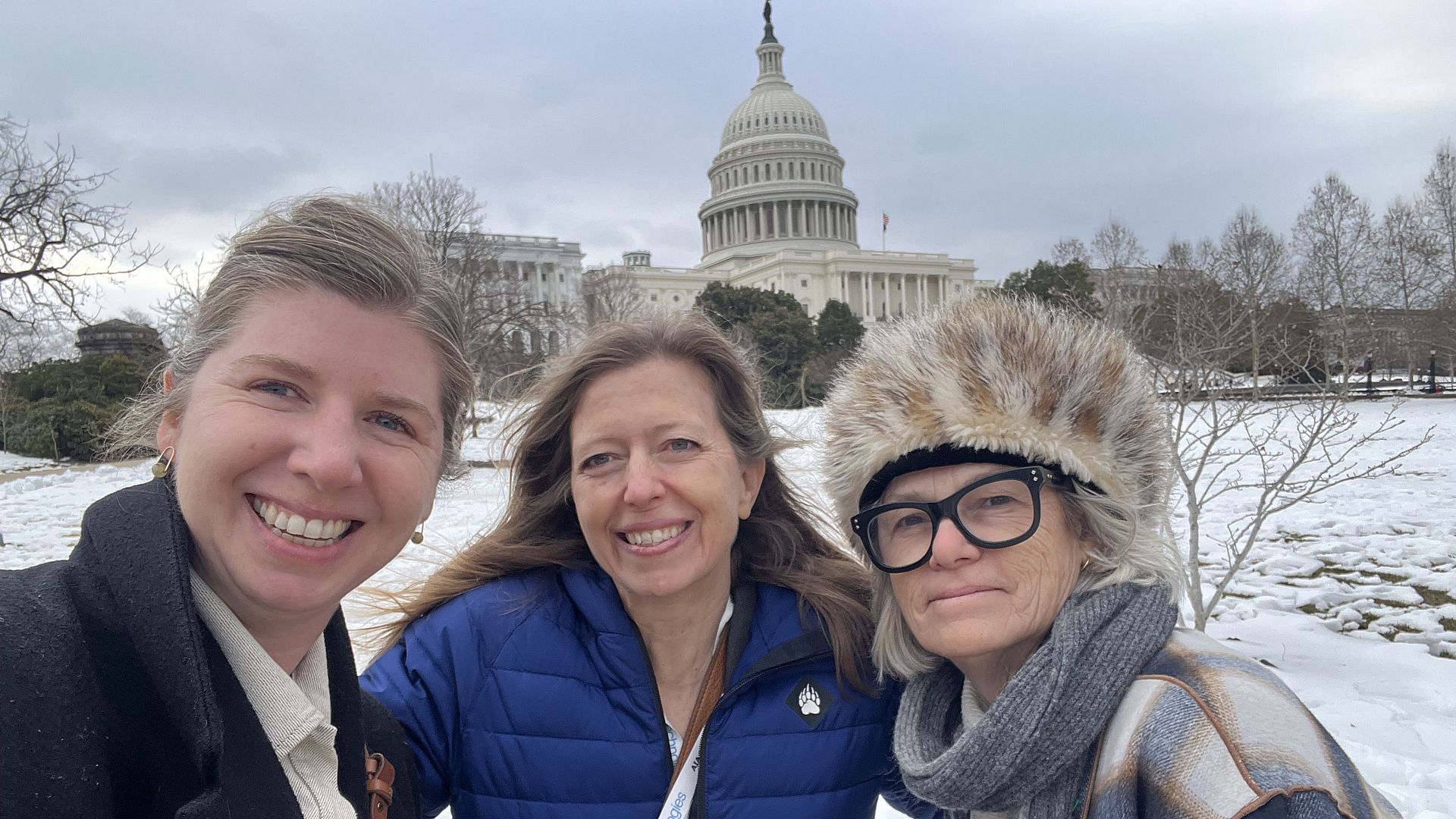
Each Februrary, AIA members gather from around the country in Washington D.C. for the annual Leadership Summit, a conference designed to support and grow our chapter's leaders. In addition to the conference, attendees also go to Capitol Hill for "Hill Day", where they meet with their state's congressional delegation to talk to them about important issues impacting the profession.
This year, the Vermont representatives included Diantha Korzun, AIA of GbArchitecture, Beto Silva, Assoc. AIA of Freeman French Freeman, and AIAVT's Executive Director, Sarah O Donnell. The group was joined for Hill Day by AIA Board member Anne Hicks Harney, AIA. The Hill Day meetings centered around four topics that AIA's Goverment Affairs team asked members to advocate for: The 179D High Performance Building Innovation Credit, Design Freedom & Accountability for Federal Architecture, Architects Support Housing Crisis Solutions, and the Opposition to Federal Loan Limits for Architecture Education. Details on these topics can be found on AIA's website here: https://www.aia.org/about-aia/press/architects-address-key-legislation-members-congress
Beto Silva, Assoc. AIA is a member of the AIA Vermont Board of Directors, and jumped at the chance to attend the Leadership Conference. Beto's shared his takeaways from attending and learning more about the inner workings of AIA:
Takeaway #1: AIA Is Much Larger and More Structured Than We Feel at the Component Level
I got clarity on how the national organization is structured. AIA has a gigantic infrastructure and leadership roles sit within a defined ecosystem.
- Architects Foundation → scholarships, ARE support, philanthropy
- Executive Office → governance + strategic direction
- Knowledge & Practice → technical resources, contracts, codes
- Marketing & Communications → public narrative of architecture
- Membership, Diversity & Component Engagement → equity + state coordination
- Alliance Partners → collaboration with:
Takeaway #2: Structural / Practical Insights
Architects Foundation
- Scholarships cover full ARE cost + study materials.
- This could directly impact emerging professionals in Vermont.
NCARB
- Utah allows:
- Hours submitted directly to the state
- NCARB registration paid after
- Hours pulled from state database
- Takeaway:
- Licensure pathways are more flexible than we assume.
- Good knowledge for mentorship conversations.
- Utah allows:
National Organization of Minority Architects (NOMA)
- Annual conference: Oct 14–18, South Florida
- To start a chapter:
- 1 licensed AEC professional as president
- 5 minimum members
- Strategic Thought:
- Does Vermont need a NOMA chapter? Or could it partner regionally?
America ByDesign™
- America ByDesign™ is a tv show highlighting architecture around the country (and coming to Vermont in 2026!)
- A media platform that elevates architecture publicly.
- Takeaway:
- Public storytelling is becoming a major tool for influence.
- That connects directly to the Tracing Careers podcast vision.
Deeper Meta Takeaways
1. The Profession Is at a Crossroads
Almost every candidate referenced:
- Climate
- Equity
- Access
- Community healing
- Public value
2. Grassroots Energy Seems Like It's Rising
Small firms. Regenerative design. Collaboration beyond AIA.
3. There’s More Support for Emerging Professionals Than I Thought
ARE scholarships. Flexible licensure paths. NOMA structure.
AIA has tools; we need to keep working at disseminating them.
Some of my thoughts coming back from the conference include:
AIA’s internal structure is complex but powerful — knowing it changes how you engage.
Climate and equity are baseline expectations for national leadership.
Storytelling is now as important as policy.
Emerging professionals have more institutional support than I was aware of.
The future of AIA may depend on grassroots collaboration and visibility of small firms.