Bridging the Divide - Geotechnical Solutions for Construction over Burlington's Historic Ravine
by Jacob F Wimett, PE, Geotechnical Engineer and Principal with GEODesign, Inc.
This is a sponsored article by GEODesign
From inception through the dawn of the 20th century, Burlington, Vermont, was a city split in two. Early industry lay along the shores of Lake Champlain, where coal and lumber were ferried between dock and train car. Downtown Burlington took form above the wharves, its streets and storefronts built by the trade and traffic flowing through the harbor.
Separate and distinct from the bustle below, "The Hill" offered drier ground, cleaner air and commanding views. This would be where the city’s early stately homes, churches and educational institutions took root.
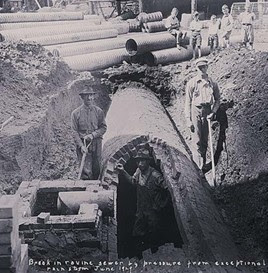
Carving Burlington in half from southwest to northeast, the historic Burlington Ravine reached depths of nearly 35 feet from rim to floor and proved a natural and immovable divide.
In the mid-1800s, the ravine's natural grade was briefly adapted for railway use, forming a direct line between waterfront dock and inland industry. But while rail use was quickly abandoned, the ravine later found itself the centerpiece of the City's primary sewer system, carrying runoff through a series of brick and stone structures built along the ravine floor. As population increased during the latter half of the century, the ravine regrettably found itself a hindrance to urban development, prompting a decision to backfill.
In the late 1800s, the material of choice used as backfill was comprised entirely of uncontrolled municipal waste, including literal household garbage, ash, street sweepings, and industrial byproducts from nearby factories. Supporting new buildings on a pile of garbage poses a considerable challenge. Any new development in areas underlain by the former Burlington Ravine must first address the risks associated with construction over these materials.
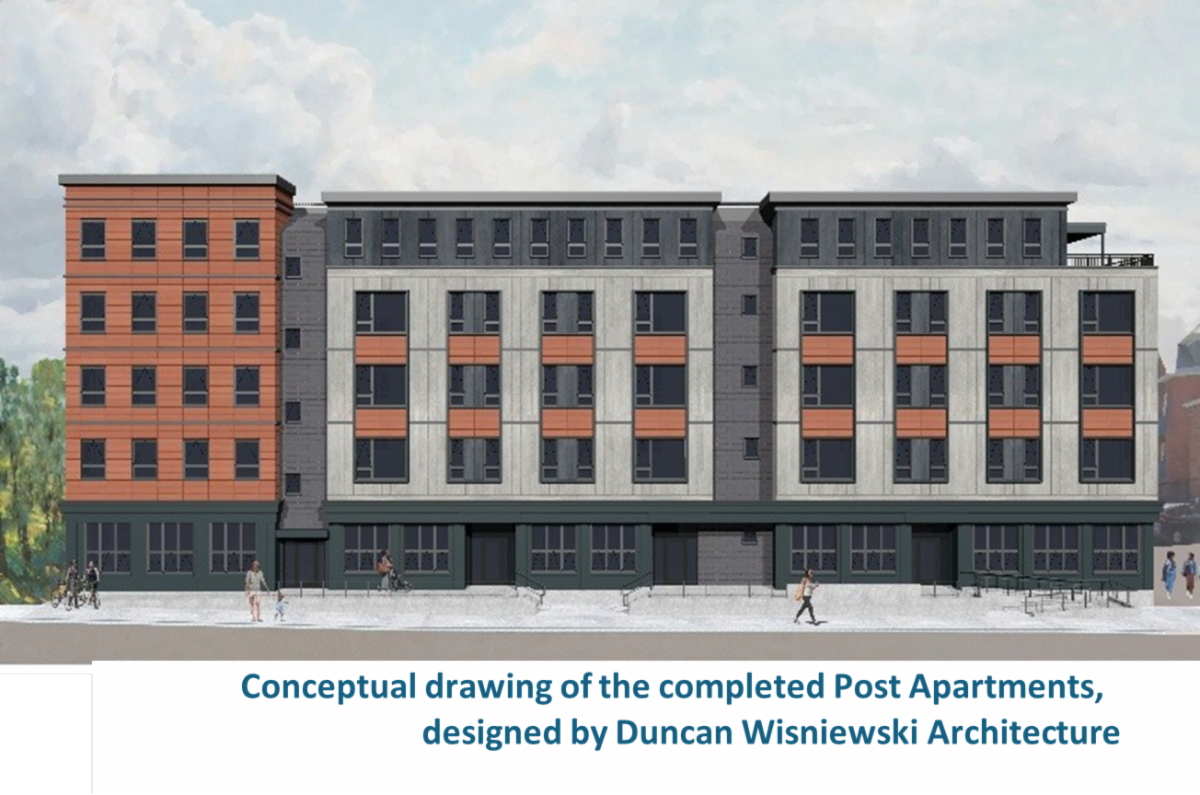
One such project affected greatly by the presence of the underlain ravine and its buried sewer is the Post Apartments development, located on the former site of the VFW Post 782 on South Winooski Avenue. Conceived through a partnership between Champlain Housing Trust and Evernorth, and designed by Duncan Wisniewski Architecture, the Post Apartment project consists of a new five-story mixed-use structure comprising 38 perpetually affordable residential units on the upper levels, with the ground floor housing the relocated VFW Post 782 and the Burlington Community Justice Center.
The historic ravine's centerline passes directly beneath the northwest corner of the new structure. Further complicating site conditions, the brick and stone sewer placed at the base of the ravine 150 years earlier, although largely forgotten, was still an intact, active and integral component of the City's sanitary and storm drainage system.
GEODesign was tasked with addressing the challenges associated with economically and safely supporting the proposed apartment building over the uncontrolled fill and active ravine sewer.
Ground Improvement at Post Apartments
While deep foundations (i.e. piles) were an attractive initial choice, the costs associated with such a system were ultimately deemed prohibitive. GEODesign therefore evaluated several alternative approaches and selected aggregate piers as the preferred solution. Aggregate piers are simply columns of crushed stone compacted into the ground to strengthen the overall soil matrix and provide necessary support for the new structure.
Compounding the complexity, the approximately 5-foot diameter brick sewer structure buried directly beneath a portion of the building site posed an additional and critical design constraint. A potential future collapse of the sewer could undermine the structural integrity of any ground improvement system employed. To address this, the sewer needed to be filled, a conclusion made possible by the fortuitous timing of a concurrent City of Burlington project set to decommission this particular segment of the ravine sewer and replace it with a rerouted modern system as part of the Great Streets Main Street initiative.
While grouting the sewer made GEODesign's proposed ground improvement approach feasible, the timing of the two projects (installing the piers and the grouting of the sewer) became problematic. Initial scheduling anticipated the ravine to be taken offline prior to the start of the Post Apartments construction.
However, as both projects progressed, it became apparent that the sewer would remain active until after completion of foundation earthwork. As a result, the ravine sewer, susceptible to vibratory damage given its age and masonry construction, was required to remain operational and therefore needed to be protected throughout construction.
This issue was addressed with the use of drilled-in rigid inclusions (i.e., unreinforced concrete columns) in lieu of aggregate piers in the immediate vicinity of the sewer. These drilled-in elements generated minimal vibration during installation and were designed to span structural loads over the sewer, thereby reducing the risk of vibration-induced damage and possible future loss of support.
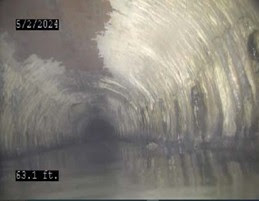
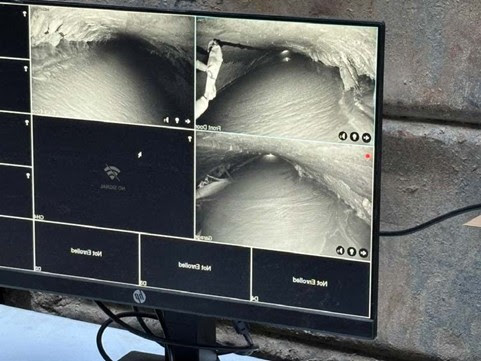
The aggregate piers and rigid inclusions were designed and installed by Helical Drilling, Inc. in the fall of 2024. GEODesign established vibration limitations for the ravine sewer and monitored ground vibrations using seismographs throughout the installation of the ground improvement system. In addition, visual monitoring of the sewer was performed using a small, remotely operated camera deployed through a cased borehole advanced from the ground surface into the top of the sewer structure.
Grouting of the Ravine Sewer
GEODesign coordinated with the City of Burlington and local contractors and drillers to grout the newly abandoned sewer beneath the proposed structure, and within the zone of influence of ground improvement elements, in order to mitigate the risk of future void formation.
In the fall of 2025, after the ravine sewer was officially taken offline, flowable fill placement within the sewer was completed by S.D. Ireland Bros. A shored excavation was advanced to the top of the sewer, and an access hole was cut to provide work access. Concrete bulkheads were constructed approximately 30 feet beyond the extents of nearest ground improvement elements, and flowable fill was pumped between the bulkheads to fill the sewer voids.
Flowable fill operations were monitored using three sacrificial remote cameras mounted to the interior ceiling of the sewer. Following the curing of the flowable fill, confirmatory drill holes were advanced into the sewer at the opposite end of the structure and inspected using downhole camera methods to verify that the sewer was completely filled.
The Post Apartments project demonstrates how creative problem-solving and close collaboration among engineers, contractors, and owners can effectively solve a unique and challenging problem. The project is anticipated to be substantially completed in February 2026.
Historic photographs by Louis L. McAllister · University of Vermont Silver Special Collections
References:
- Obscure Vermont, Disappearing Act: Burlington’s lost ravine. by Chad Abramovich August 5, 2013
- Seven Days, Stuck in Vermont: Digging Into the Ravine That Divided Burlington in the 1800s, by Eva Sollberger March 21, 2024
- Burlington Free Press, What lies beneath Burlington?, by Joel Banner Baird June 30, 2014
- Champlain Housing Trust, Post Apartments Add Affordable Homes to Downtown Burlington, Article posted May 2, 2024 on their website getahome.org
About the Author: Jacob F Wimett, PE
Jake is a Geotechnical Engineer and Principal with GEODesign, Inc., working out of the Montpelier, Vermont office. Now in his 21st year with the firm, Jake has served as lead engineer and project manager on numerous projects throughout New England; including subsurface explorations; geotechnical instrumentation; engineering analyses of shallow and deep foundations; embankments and retaining wall design; ground improvement methods; slope stabilization; pavement evaluation, dam rehabilitation and maintenance oversight; and construction monitoring.
Jake can be contacted at 802.674.2033 ext. 213 or by email at jwimett@geocompanies.com.